
Beef and Pork Jerky in Your Carry-on to Taiwan: Import Bans and Fine Thresholds
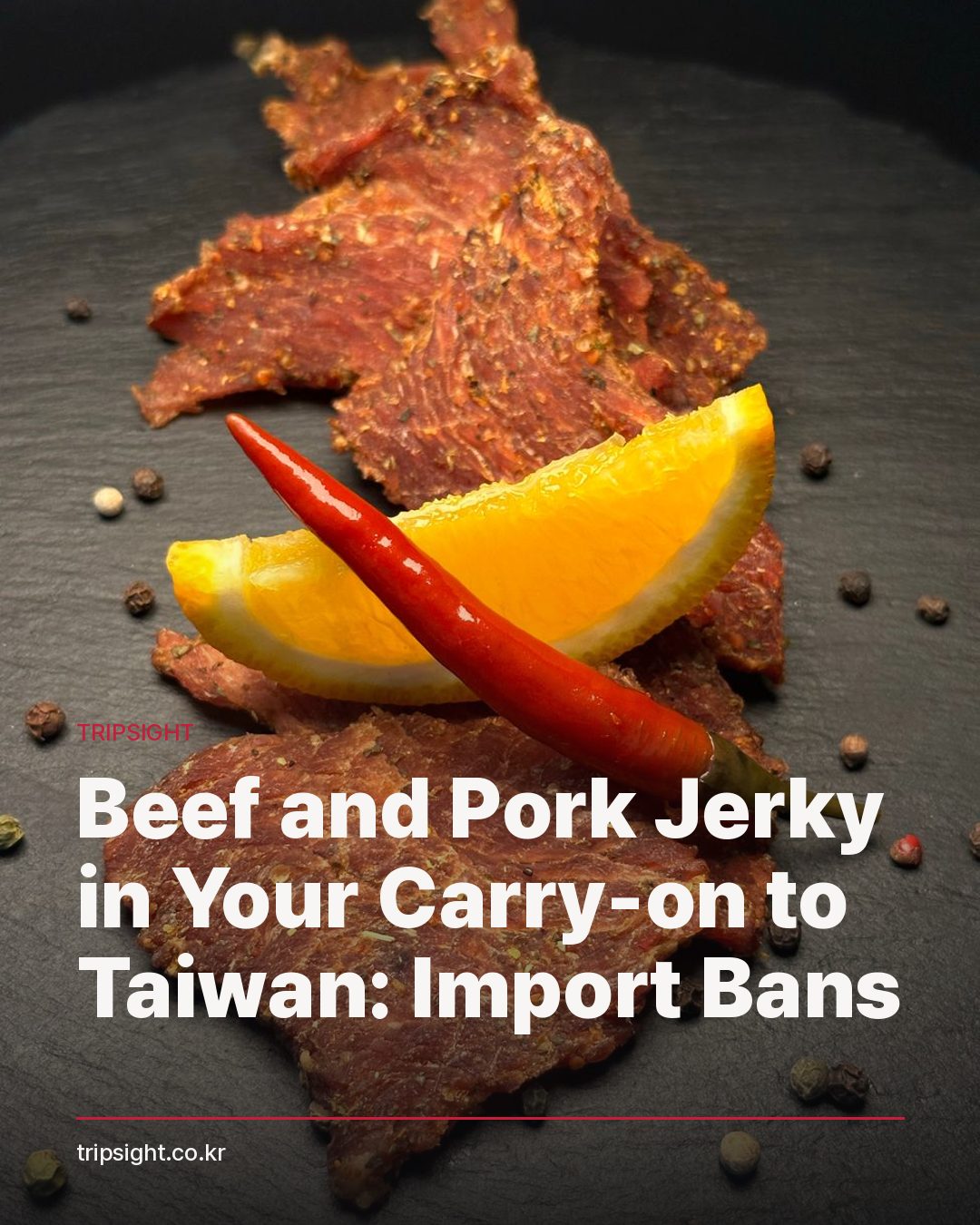
Beef jerky and pork jerky packed in your suitcase when entering Taiwan are banned items regardless of whether they are vacuum packed. If customs catches you without a declaration, you will be fined between NT$10,000 and NT$1,000,000 under Article 45-1 of the Act for the Prevention and Control of Animal Infectious Diseases. If the pork product was brought in from a country or region where African swine fever has occurred within the past three years, a separate, heavier rule applies: NT$200,000 for a first offense and NT$1,000,000 for a repeat offense.
Both Beef and Pork Jerky Are on the Banned List
According to a report by the Central News Agency (CNA) that compiled data from Taiwan's Bureau of Animal and Plant Health Inspection and Quarantine (BAPHIQ) under the Ministry of Agriculture, dried and cured meat products such as jerky, rousong (meat floss), sausages, bacon, ham, and hot dogs are all classified as items banned from entry into Taiwan.
Vacuum packing only removes air from the package, so it has no bearing on whether a virus can survive. Meat that has not been sterilized using high-temperature, high-pressure processing stays on the banned list no matter how it is packaged.
- Zongzi (Taiwanese sticky rice dumplings) containing meat
- Mooncakes containing meat
- Meat dumplings and buns
- Beef jerky, pork jerky, and processed duck neck or feet products
The only exception allowed into the country from this list is canned products that have undergone high-temperature, high-pressure sterilization and can be stored at room temperature.
Fines Differ for Pork and Beef When Caught
Article 45-1 of the Act for the Prevention and Control of Animal Infectious Diseases sets a fine of NT$10,000 to NT$1,000,000 for travelers who fail to meet their quarantine declaration obligations. This provision passed the Legislative Yuan on November 30, 2018 and took effect on December 14, a sharp increase from the previous range of NT$3,000 to NT$15,000.
Within this range, there is a separate, heavier rule that applies specifically to pork products. According to a TechNews report, BAPHIQ set the fine at NT$200,000 for a first offense and NT$1,000,000 for a repeat offense when pork products are found to have come from a country or region where African swine fever occurred within the past three years.
| Category | Legal basis | Fine |
|---|---|---|
| General meat products (assessed case by case) | Article 45-1 of the Act for the Prevention and Control of Animal Infectious Diseases | NT$10,000 to NT$1,000,000 |
| Pork products from countries or regions with ASF outbreaks in the past three years | BAPHIQ disposition rules | NT$200,000 for a first offense, NT$1,000,000 for a repeat offense |
| Large-scale imports by mail or courier | Article 45 of the Act for the Prevention and Control of Animal Infectious Diseases | Up to 7 years imprisonment, with a fine of up to NT$3,000,000 possible in addition |
The first case in which this heavier rule was applied involved a passenger who arrived on Xiamen Airlines flight MF879 on December 18, 2018. According to a Mirror Media report, this passenger was caught passing through the duty free (green) lane with vacuum packed pork jerky without declaring it, and became the first person in Taiwan to be fined NT$200,000 under this rule.
Beef jerky has no connection to African swine fever, so it is not subject to the pork-specific heavier rule. Instead, the fine amount falls within the general range of NT$10,000 to NT$1,000,000 set by Article 45-1, determined by the quantity and processing state of the items seized.
Why Pork Jerky from South Korea Requires Extra Caution
South Korea is a country where African swine fever outbreaks were reported as recently as January 2026. According to an S&P Global report, South Korea recorded 4 new outbreaks in January 2026 alone, a figure assessed as representing less than 1% of the country's annual pig shipment volume.
According to data released by Taiwan's National Immigration Agency in June 2026, between January 1, 2026 and the time of release, 69 foreign nationals were denied entry at airports and seaports after being caught bringing in meat products and failing to pay the fine on the spot. By nationality, China, Hong Kong, and Macau accounted for the largest number, followed by Thailand and South Korea with 9 each. This data can be found in the National Immigration Agency announcement.
If you have packed pork jerky purchased in South Korea into your suitcase for a trip to Taiwan, it is safer to keep in mind the possibility that the outbreak-country heavier rule may apply, and either declare it on your arrival form or inform the quarantine counter in advance.
Declare It and It's Confiscated with No Fine, Fail to Declare and You're Fined
According to the CNA report, if you voluntarily declare beef or pork jerky at the quarantine declaration counter upon arrival, customs will simply confiscate and dispose of the items, and no fine is imposed.
Conversely, if you pass through the duty free lane without declaring it and get caught, as in the 2018 case described above, the fine rules explained earlier apply in full. Marking whether you are carrying beef or pork jerky on the animal and plant quarantine section of your arrival form and heading to the red lane (declaration counter) is the only way to avoid a fine.
Failure to Pay the Fine Means Denied Entry, and Large-Scale Imports Carry Criminal Penalties
If a foreign traveler who is not a Taiwanese national or resident fails to pay the NT$200,000 fine on the spot, they will be denied entry and sent back, following the procedure described in the National Immigration Agency announcement mentioned earlier.
If someone is caught bringing in large quantities of pork products by mail or courier, Article 45 of the Act for the Prevention and Control of Animal Infectious Diseases allows for up to 7 years imprisonment, with a fine of up to NT$3,000,000 possible in addition. A Taiwan News report notes that this provision has mainly been applied to cross-border shopping parcels, such as Mid-Autumn Festival mooncakes, or commercial imports, rather than small amounts in personal luggage.
Sources: Central News Agency (CNA), "重罰防非洲豬瘟 這些食物不准帶回台" (December 19, 2018)
Sources: TechNews, "防堵非洲豬瘟 違規最重罰100萬" (December 19, 2018)
Sources: S&P Global, "South Korea reports 4 outbreaks of ASF in Jan" (January 28, 2026)